When To Perform Calibration, Verification, or Both?
As a Calibration technician, or quality personnel, have you felt confused about whether to perform calibration or verification on a specific instrument? How can you tell if you only need verification? Or Just calibration? What needs to be performed first, … Read More
Simple Ways to Apply Correction Factors In a Calibration Certificate-If the Exact Value You Need Is Not Given
Have you encountered the following scenario? You are interpreting a calibration certificate but you noticed that the correction factor you need is not exactly displayed or provided in the report, what can you do? The measurement data of your instrument … Read More
Types of Weighing Scales and their Applications
Weighing scales are the need of almost every business. Some people also use weighing scales at home to monitor their body weight. A scale is a measuring device that allows you to determine the mass and weight of an object. … Read More
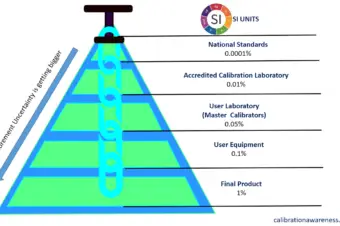
The Deeper Meaning of a Traceable Calibration Every Calibration Technician Must Understand
You may have a properly maintained calibration lab, well-trained personnel, high-end measuring equipment but the traceability of the reference standard you use is in question, then the calibration performed could be rejected. As a beginner once in calibration, my only … Read More
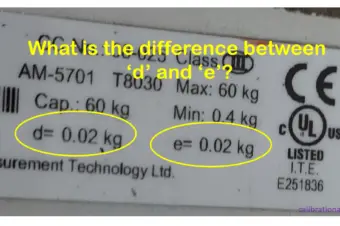
How to Find MPE of Weighing Scale – Simple Guide to Determine Balance Tolerance if NOT Given
Before considering using a balance or performing a weighing scale verification, one primary requirement is to know the tolerance limit. The user should determine the tolerance limit in consideration of their process, but this is not always the case. As … Read More

How to Determine ISO 17025 Personnel Competence Requirements – A 6-Step Implementation Guide
Are you qualified to perform the calibration? This is the question I sometimes encounter during assessment or audits related to the competency of personnel. Personnel competency is one of the main requirements in a calibration process where auditors are so … Read More
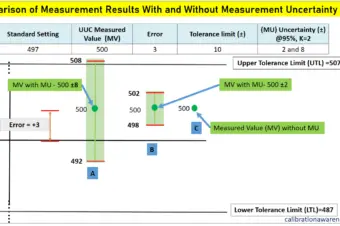
8 Ways How You Can Use the Measurement Uncertainty Reported in a Calibration Certificate
Let me ask you a question, have you ever used the Measurement Uncertainty (MU) reported in your calibration certificate? Most users of certificates that I meet who are In-charge in calibration do not use the measurement uncertainty results in their … Read More
5 Steps to Implement ISO 17025 Decision Rule – How to Apply the Decision Rule in a Calibration Results
You received a pressure gauge calibration certificate with the following results: You are asked to interpret these results to determine if the results of the calibration have passed or failed by accounting the measurement uncertainty in the measurement results before … Read More
CALIBRATION INTERVAL: HOW TO INCREASE THE CALIBRATION FREQUENCY OF INSTRUMENTS
With the pandemic that we have experienced, affecting every industry in the world, one strategy to avoid an overdue instrument and ensure an updated calibration program is to extend the calibration due date or calibration interval of our instruments. But doing this … Read More
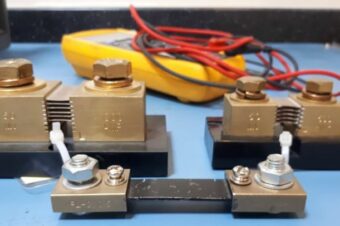
Important Use of a Current Shunt in Electrical Calibration
How to extend the current measurement range of your handheld digital multimeter up to 10X or more? Most regular handheld multimeters have a current range that you can measure up to 10A. A problem occurs when there are situations where … Read More